Budget GPU Battle: RTX 4060 vs RX 7600
Both target 1080p on a budget, but the RTX 4060's DLSS 3 and efficiency edge out the RX 7600's lower price for long-term value.
S
Spektova Editorial
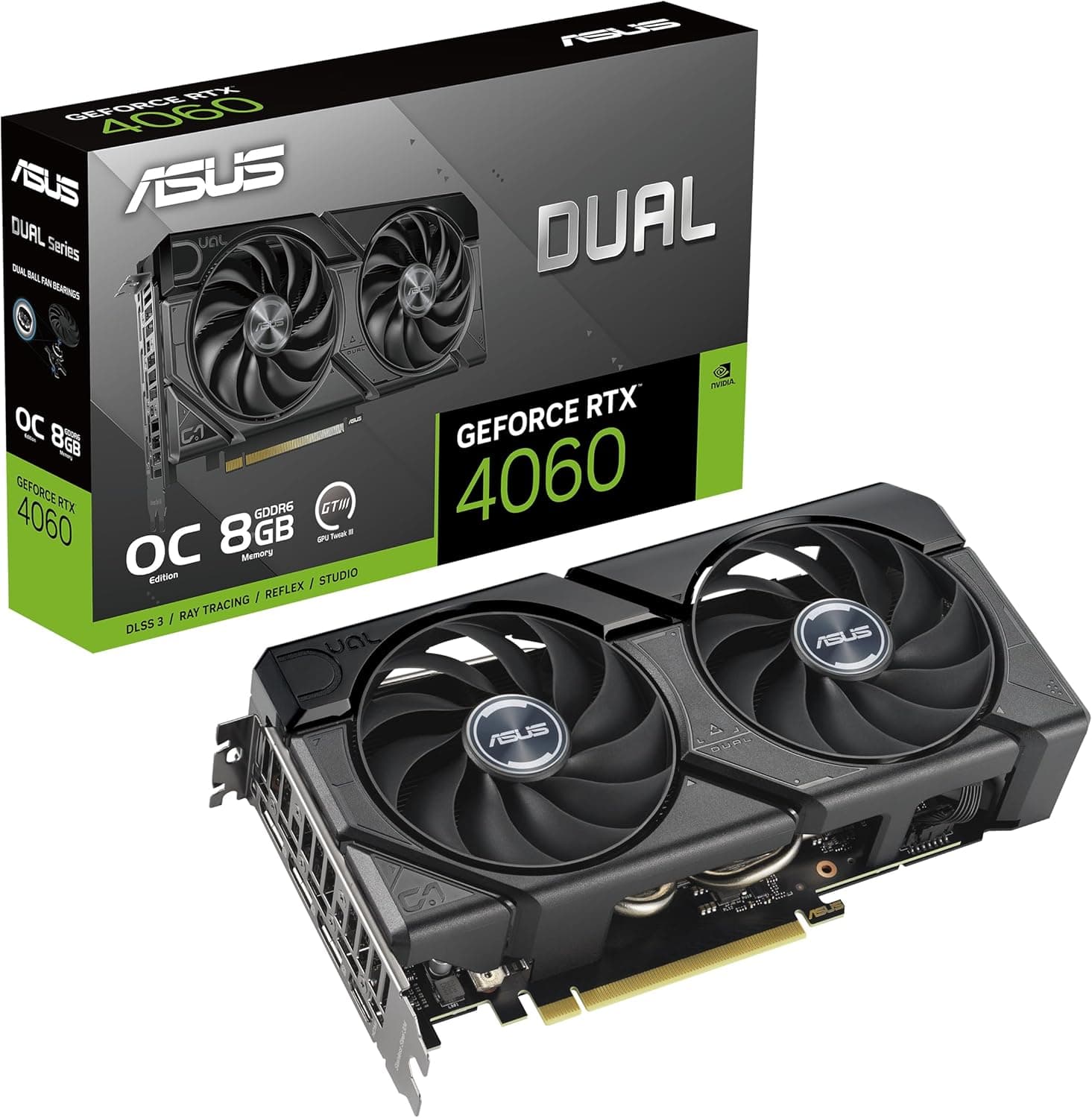
Both target 1080p on a budget, but the RTX 4060's DLSS 3 and efficiency edge out the RX 7600's lower price for long-term value.
| GPU | Rating | VRAM | Best for |
|---|---|---|---|
| NVIDIA RTX 4060 | 3.5/5 | 8GB | DLSS 3, efficiency & long-term value |
| AMD RX 7600 | 3.5/5 | 8GB | The cheapest solid 1080p experience |
Quick verdict: both are capable 1080p cards — the RTX 4060 earns its small premium with DLSS 3 and lower power draw, while the RX 7600 wins on raw price.
The budget GPU market has never been more competitive, and two cards stand at the forefront of the sub-$300 segment: NVIDIA's GeForce RTX 4060 and AMD's Radeon RX 7600. Both cards target 1080p gaming enthusiasts who want modern architecture without breaking the bank, and both carry identical 8GB GDDR6 VRAM configurations over a 128-bit memory bus. At first glance, these two cards look remarkably similar on paper — but dig deeper and meaningful differences emerge that could make one a better fit depending on your priorities.
The RTX 4060 typically retails around $299, while the RX 7600 undercuts it at around $269, making price one of the first battlegrounds. But value is about more than sticker price, so let's break down how these two budget champions compare across every dimension that matters.
NVIDIA's RTX 4060 is built on the Ada Lovelace architecture, bringing with it a remarkably low 115W TDP — an impressive figure for a modern discrete GPU. This efficiency translates to cooler, quieter operation, and many AIB partner cards come in compact dual-slot or even single-fan configurations. The card pairs well with a 550W PSU, leaving headroom for the rest of your system. Its 3072 CUDA cores are paired with dedicated hardware for DLSS 3 Frame Generation, a feature unique to Ada Lovelace that can dramatically boost perceived frame rates in supported titles.
AMD's RX 7600 is built on the RDNA 3 architecture and draws more power at 165W TDP — still reasonable by historical standards, but notably higher than the RTX 4060. It also recommends a 550W PSU, making both cards similarly accessible for budget builds. The RX 7600 features 2048 Stream Processors and benefits from AMD's FSR upscaling technology, which works across a wider range of games and even on competing hardware. Its compact dual-slot design makes it an excellent fit for smaller form factor builds.
From a physical standpoint, both cards are builder-friendly, but the RTX 4060's lower power draw gives it a slight edge in thermal headroom and long-term reliability considerations.
At 1080p — the primary target for both cards — performance is closely matched. The RTX 4060 holds a modest lead in rasterization-heavy titles, typically offering 5–10% higher average frame rates. However, the gap widens considerably in ray tracing scenarios, where NVIDIA's dedicated RT cores and superior driver maturity give the RTX 4060 a meaningful advantage. Titles like Cyberpunk 2077 and Alan Wake 2 with ray tracing enabled run noticeably smoother on the RTX 4060.
The RTX 4060's trump card is DLSS 3, specifically Frame Generation. In supported titles, this feature can nearly double perceived frame rates, pushing the card well beyond its native rasterization ceiling. This effectively makes the RTX 4060 punch above its weight class in a growing library of games. AMD's FSR 3, while catching up with its own Frame Generation support, doesn't yet have the same breadth of game support or the same image quality consistency.
At 1440p, both cards begin to struggle without upscaling assistance, and the 128-bit memory bus becomes a bottleneck for both. Neither card is a confident 1440p solution at high settings natively, but DLSS gives the RTX 4060 a more viable path to smooth 1440p gaming in supported titles. The RX 7600 can hold its own at 1440p medium settings with FSR enabled, but it requires more compromise.
For productivity workloads, the RTX 4060 benefits from NVIDIA's mature CUDA ecosystem, making it a better choice for creators who use tools like DaVinci Resolve, Blender, or Adobe Premiere with GPU acceleration.
This is where the debate gets interesting. The RX 7600 costs roughly $30 less than the RTX 4060, and at pure 1080p rasterization, the performance gap doesn't fully justify that price difference. If your gaming library doesn't heavily feature DLSS 3 titles and you have no interest in ray tracing, the RX 7600 offers excellent bang for your buck and is arguably the smarter purchase on a tight budget.
However, if you plan to keep this card for several years, the RTX 4060's DLSS 3 support becomes increasingly valuable as more games adopt it. The lower power consumption also means reduced electricity costs over time and quieter operation — soft benefits that accumulate meaningfully over a long ownership period. For buyers who dabble in content creation or AI-assisted workloads, NVIDIA's ecosystem adds further long-term value.
Both cards share the same fundamental limitation: 8GB of VRAM on a 128-bit bus. This is a genuine concern as modern games push VRAM requirements higher, and neither card is future-proofed in this regard. It's a compromise you accept at this price point.
Both the RTX 4060 and RX 7600 earn their 7/10 ratings — they're competent 1080p cards with real-world limitations that prevent a higher score. The right choice ultimately depends on your use case and budget flexibility.
Choose the RTX 4060 if you want the best long-term investment, value ray tracing performance, use creative software, or want access to DLSS 3 Frame Generation for future-proofing your frame rate headroom. The extra $30 buys a meaningfully more capable feature set.
Choose the RX 7600 if you're on the tightest possible budget, game primarily at 1080p in non-ray-traced titles, or want a compact, low-power card for a small form factor build. It delivers strong core performance for its price and gets the job done without fuss.
Neither card will disappoint at 1080p today — but the RTX 4060's ecosystem advantages make it the slightly more recommended pick for buyers who can stretch their budget just a little further.
The AMD Radeon RX 7600 — it is the direct competitor in price and 1080p rasterization performance. The two cards trade blows in traditional games, with the RTX 4060 pulling ahead in ray tracing and any title that supports DLSS 3 Frame Generation.
In pure rasterization they are within a few percent of each other at 1080p. The RTX 4060 is clearly faster with ray tracing enabled and gains a large practical advantage in DLSS 3-supported titles, while drawing noticeably less power. The RX 7600 typically counters with a lower street price.
For 1080p gaming, generally yes — both cards handle high settings in most titles. The newest releases at maximum texture quality can exceed 8GB, so expect to dial one or two settings down occasionally. For 1440p or long-term headroom, consider stepping up to a 12-16GB card.
Get the best deals and reviews in your inbox.
We respect your privacy. Unsubscribe anytime.
 Top list
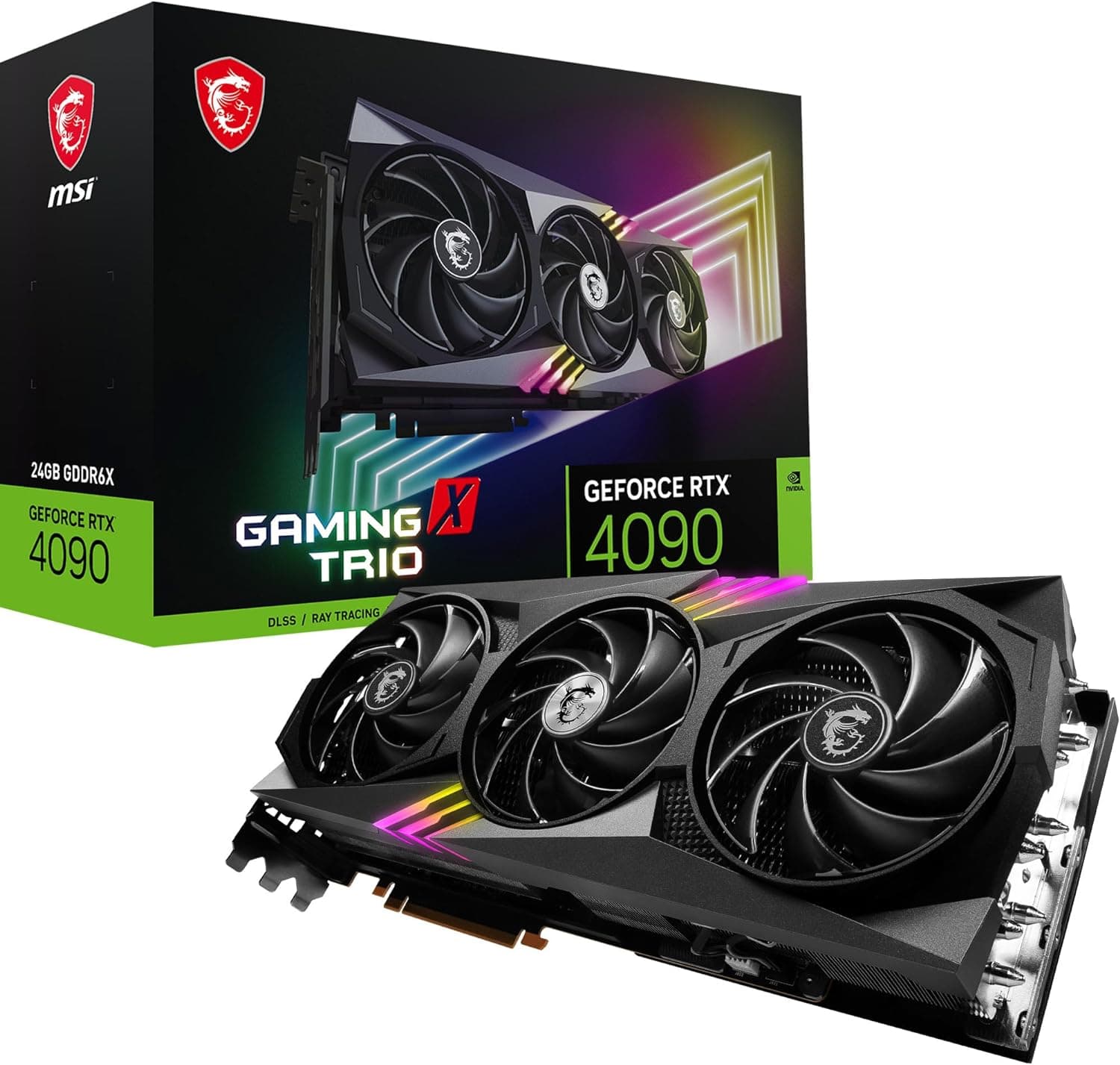
From the RTX 4090's unmatched 4K dominance to budget-friendly 1080p options, here are the best GPUs you can buy in 2026 across every price point.
Buying guideFrom budget 1080p cards to flagship 4K monsters, this guide explains every GPU spec that matters and matches you to the right graphics card for your budget.
The LG 27GR95QE-B OLED tops our 2026 peripherals list with its 480Hz refresh rate and 0.03ms response time — the fastest gaming display available at any price.
The HYTE Y60 is the best PC case in 2026 for most builders — panoramic glass, dual-chamber layout, and PCIe 4.0 riser at just $68. The HYTE Y70 Touch leads for enthusiasts.