Best Graphics Cards in 2026: Our Top Picks
From the RTX 4090's unmatched 4K dominance to budget-friendly 1080p options, here are the best GPUs you can buy in 2026 across every price point.
S
Spektova Editorial
From the RTX 4090's unmatched 4K dominance to budget-friendly 1080p options, here are the best GPUs you can buy in 2026 across every price point.
| Rank | GPU | Rating | Award |
|---|---|---|---|
| 1 | NVIDIA RTX 4090 | 5.0/5 | Best Overall |
| 2 | NVIDIA RTX 4080 SUPER | 4.5/5 | Runner-Up |
| 3 | NVIDIA RTX 4070 SUPER | 4.5/5 | Best Value |
| 4 | AMD RX 7900 XTX | 4.5/5 | AMD flagship |
| 5 | AMD RX 7800 XT | 4.5/5 | 1440p value |
| 6 | NVIDIA RTX 4060 Ti | 4.0/5 | Compact 1080p |
| 7 | NVIDIA RTX 4060 | 3.5/5 | Budget DLSS 3 |
| 8 | AMD RX 7600 | 3.5/5 | Budget raster |
Choosing the right graphics card in 2026 is more important — and more complex — than ever. Whether you're chasing buttery-smooth 4K framerates, hunting the best 1440p value, or simply trying to breathe new life into an aging rig without breaking the bank, the GPU market has something for every budget and use case. We've tested and ranked the top eight graphics cards available right now, from NVIDIA's dominant Ada Lovelace lineup to AMD's competitive RDNA 3 offerings. Here's where every card lands and why.
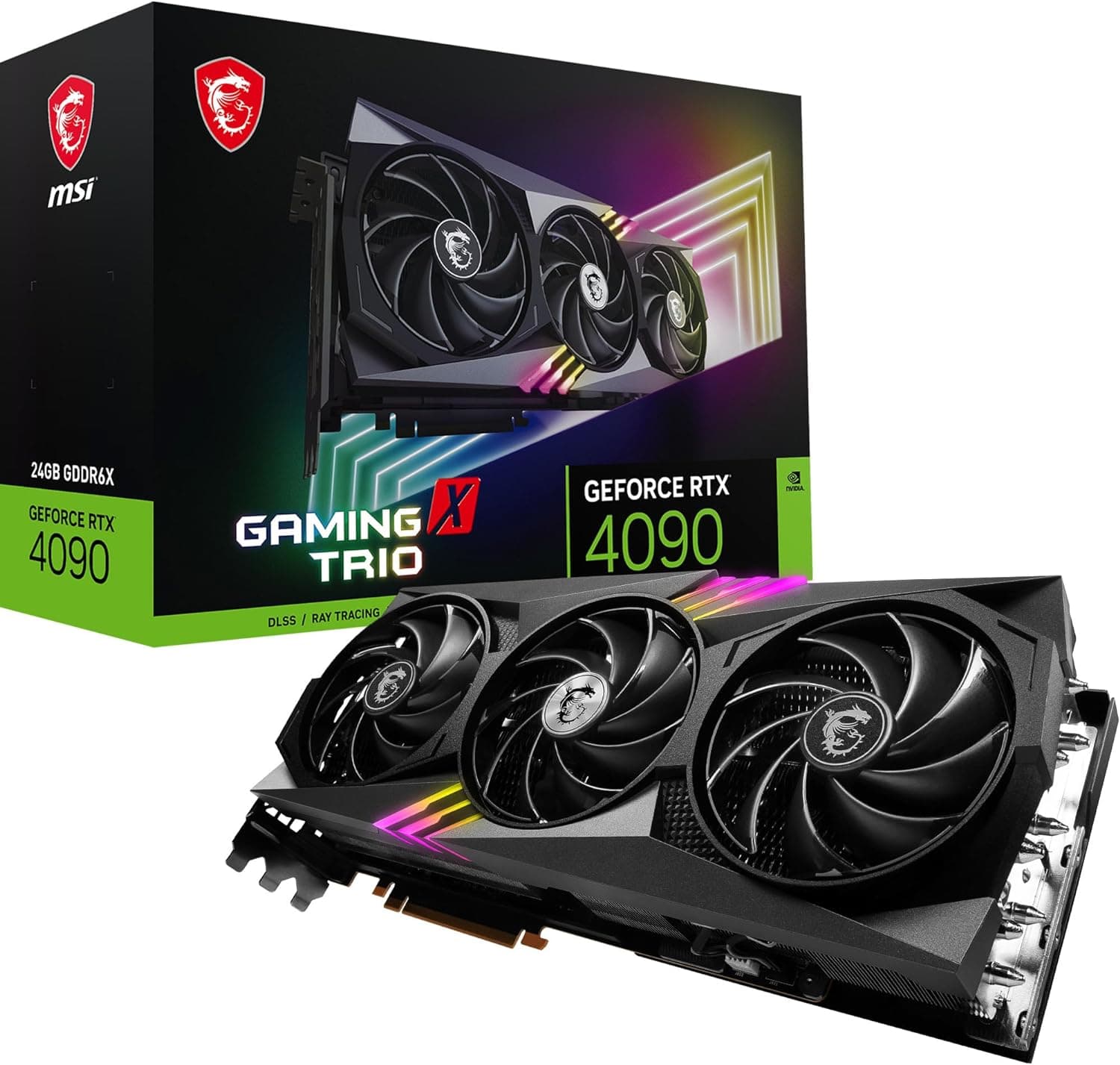
The RTX 4090 remains the undisputed king of consumer graphics cards in 2026. With 16,384 CUDA cores, 24GB of GDDR6X VRAM on a 384-bit memory bus, and DLSS 3 Frame Generation support, no other card comes close to its raw performance ceiling. At 4K, it doesn't just lead — it dominates, often delivering framerates that competing cards can only dream of. Beyond gaming, its AI and machine learning credentials make it a genuine workstation-class card for creators and researchers. Yes, the 450W TDP demands a robust power supply and a well-ventilated case, and the triple-slot cooler is genuinely massive. The price tag is eye-watering. But if you want the absolute best and cost is secondary, the RTX 4090 is the only answer.
For those who want flagship-tier 4K performance without quite the flagship price or power draw, the RTX 4080 SUPER is an outstanding alternative. Its 10,240 CUDA cores and 16GB of GDDR6X VRAM on a 256-bit bus deliver exceptional performance in every modern title, and DLSS 3 Frame Generation keeps framerates sky-high even in the most demanding scenarios. At 320W, it's meaningfully more efficient than the RTX 4090, though it still requires a substantial power supply and a large case. At $999, it's still a premium investment, but for serious 4K gaming enthusiasts who want to stop just short of the absolute top, the RTX 4080 SUPER earns its place on this list.
The RTX 4070 SUPER is where the Ada Lovelace architecture truly shines for the mainstream enthusiast. Offering excellent 1440p performance and even capable 4K gaming with DLSS 3 Frame Generation, it punches well above its weight class. The 12GB of GDDR6X VRAM on a 192-bit bus gives it meaningful headroom over its competitors at this price tier, and its 220W TDP makes it one of the more power-efficient high-performance cards available. The recommended 700W PSU is worth noting, but the overall efficiency story here is impressive. It's not a massive leap over the standard RTX 4070, but the SUPER variant's improved specs make it the smarter buy for anyone sitting in the 1440p sweet spot.
AMD's flagship RDNA 3 card makes a compelling case with its enormous 24GB GDDR6 VRAM buffer and 384-bit memory bus — specs that match the RTX 4090 on paper and beat it on price. In pure 4K rasterization workloads, the RX 7900 XTX is genuinely competitive, and the dual HDMI 2.1 and dual DisplayPort 2.1 outputs give it a connectivity edge for multi-monitor setups. Where it falls short is ray tracing performance — NVIDIA still holds a clear lead here — and the absence of a true Frame Generation equivalent keeps it a step behind in supported titles. At 355W, the power draw is significant. But for AMD loyalists or those who prioritize rasterization and raw VRAM, this card delivers serious value at the top end.
The RX 7800 XT is arguably the best price-to-performance card for 1440p gaming in 2026. Its 16GB of GDDR6 VRAM — the most in its class — on a 256-bit memory bus gives it a significant advantage over NVIDIA's 8GB and 12GB alternatives at similar price points. Rasterization performance at 1440p is excellent, and it handles most modern titles at high to ultra settings with ease. The 263W TDP is higher than the RTX 4070 SUPER, and ray tracing remains AMD's Achilles heel, but for gamers who primarily play titles without heavy RT workloads, the RX 7800 XT offers exceptional bang for the buck.
The RTX 4060 Ti hits a comfortable sweet spot for 1080p and entry-level 1440p gaming. Its 160W TDP is impressively low for its performance tier, and DLSS 3 Frame Generation support means it can punch above its weight in supported titles. The compact single 8-pin power connector makes it easy to fit into smaller builds. The elephant in the room is the 8GB VRAM over a 128-bit bus — a limitation that's becoming more noticeable as modern games push VRAM requirements higher. It's not a dramatic upgrade over the RTX 3060 Ti for existing owners, but for new builds in this price range, it's a solid and efficient choice.
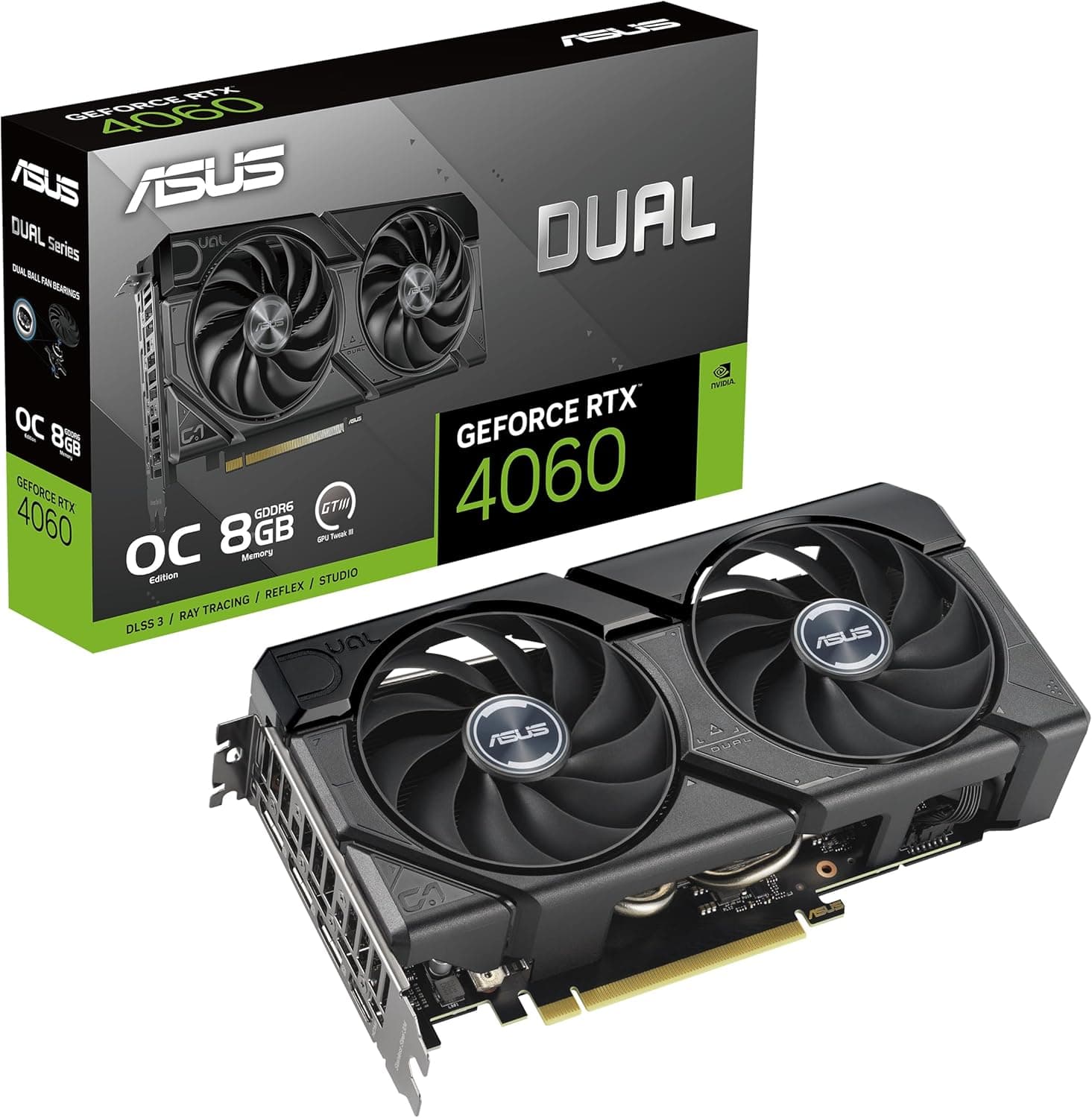
At just 115W TDP, the RTX 4060 is one of the most power-efficient gaming GPUs ever made. It runs cool, stays quiet, and delivers genuinely good 1080p performance with access to DLSS 3 Frame Generation — a feature typically reserved for more expensive cards. For budget-conscious builders or those with small form factor cases and modest power supplies, it's an easy recommendation. The 8GB VRAM and 128-bit memory bus will limit its longevity, and 1440p gaming without DLSS assistance can be a stretch in demanding titles. But as an affordable entry point into the Ada Lovelace ecosystem, it gets the job done.
Rounding out our list is AMD's entry-level RDNA 3 offering. The RX 7600 delivers solid 1080p gaming performance for under $270, with a compact dual-slot design and a reasonable 165W power draw. It's a great option for budget builders who want a modern GPU without committing to a high-end power supply. Like the RTX 4060, the 8GB VRAM and 128-bit memory bus are limiting factors, and ray tracing performance lags behind NVIDIA's equivalent offerings. But for straightforward 1080p gaming on a tight budget, the RX 7600 is a practical and capable choice.
Our GPU testing methodology covers a comprehensive suite of benchmarks across multiple resolutions and workloads. We tested each card at 1080p, 1440p, and 4K using a standardized platform with a modern high-core-count CPU to eliminate CPU bottlenecks. Game benchmarks included a mix of rasterization-heavy titles, ray tracing workloads, and DLSS/FSR-enabled scenarios to reflect real-world gaming conditions. We also evaluated power consumption under load using a wall meter, thermal performance over extended gaming sessions, and noise levels at one meter. For cards with AI upscaling support, we tested both native and upscaled performance modes. Scores reflect a balance of raw performance, efficiency, value for money, and feature set relative to each card's price tier.
The NVIDIA RTX 4090 — still the most powerful consumer GPU of its generation, dominant at 4K and untouchable in ray-traced and AI workloads. For most gamers, though, the RTX 4070 Super offers the best balance of price and performance on this list.
Yes, in consumer graphics it remains the benchmark: roughly 20-25% faster than the RX 7900 XTX in 4K rasterization, with a far larger lead once ray tracing or AI features enter the picture.
The RTX 4070 Super or the RX 7800 XT. The 4070 Super brings superior ray tracing and DLSS 3; the 7800 XT counters with 16GB of VRAM and aggressive pricing. Either delivers excellent high-refresh 1440p.
The RTX 4060 or RX 7600 for 1080p. The 4060 is worth its small premium for DLSS 3 Frame Generation and lower power draw; the RX 7600 is the play if every dollar counts.
Get the best deals and reviews in your inbox.
We respect your privacy. Unsubscribe anytime.
 Comparison
The RTX 4070 SUPER leads as the best all-round pick at $580, while the 4060 Ti suits budget 1080p builds and the 4090 dominates 4K at a steep $1,600 premium.
ComparisonThe RTX 4090 dominates in raw performance, the RTX 4080 Super offers balanced value, and the RX 7900 XTX delivers competitive 4K gaming at a lower price.
ComparisonThree mid-range GPUs battle for 1440p dominance. The RTX 4070 Super leads on features, the RX 7800 XT wins on value and VRAM, and the RTX 4060 Ti excels at efficiency.
 Comparison
Both target 1080p on a budget, but the RTX 4060's DLSS 3 and efficiency edge out the RX 7600's lower price for long-term value.