RTX 4090 vs RTX 4080 Super vs RX 7900 XTX: Which Flagship GPU Wins?
The RTX 4090 dominates in raw performance, the RTX 4080 Super offers balanced value, and the RX 7900 XTX delivers competitive 4K gaming at a lower price.
Overview
The flagship GPU market has never been more competitive — or more confusing. NVIDIA's GeForce RTX 4090 sits at the undisputed apex of consumer graphics, but its eye-watering price tag forces many buyers to consider alternatives. The RTX 4080 Super offers a refined NVIDIA experience at a lower cost, while AMD's Radeon RX 7900 XTX challenges both with competitive rasterization performance and generous VRAM at a more palatable price. We've put all three head-to-head to help you decide which flagship GPU deserves a spot in your rig.
Design Comparison
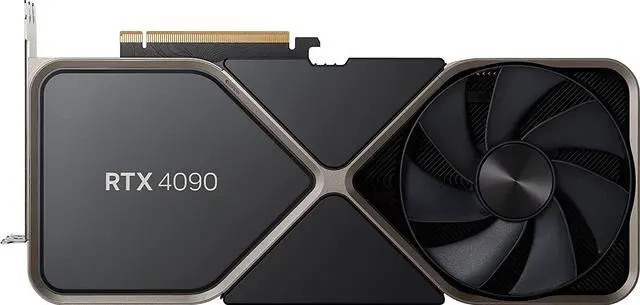
All three cards occupy significant real estate inside your case — don't expect any of them to be subtle. The RTX 4090 is the undisputed heavyweight, typically requiring a triple-slot footprint and measuring over 330mm on most AIB partner models. Its 16-pin 12VHPWR connector demands an 850W PSU at minimum, and many builders opt for a 1000W unit for headroom. The sheer physical presence of the 4090 can cause compatibility issues in mid-tower cases.
The RTX 4080 Super is no shrinking violet either, also occupying three slots, but it's generally more manageable in terms of length and weight. Its 320W TDP is meaningfully lower than the 4090's 450W, making it friendlier to existing power supplies. Both NVIDIA cards share the same output configuration: one HDMI 2.1 port and three DisplayPort 1.4a connectors.
AMD's RX 7900 XTX takes a slightly different approach, offering two HDMI 2.1 ports and two DisplayPort 2.1 connectors — a notable advantage for those running multiple high-refresh-rate monitors or next-gen displays. Its 384-bit memory bus is wider than both NVIDIA competitors, and while its 355W TDP sits between the other two, its cooling solutions tend to be slightly less refined on reference models. AIB variants improve this considerably.
Performance Comparison
At 4K resolution — the primary battleground for these cards — the RTX 4090 is simply in a class of its own. It consistently delivers 20–30% higher frame rates than the RTX 4080 Super across demanding titles, and its 24GB of GDDR6X VRAM ensures it won't be memory-limited by any current or near-future game. DLSS 3 Frame Generation pushes performance even further in supported titles, making 4K 120fps a realistic target in games that previously struggled to hit 60fps.
The RTX 4080 Super is no slouch, however. With 10,240 CUDA cores and 16GB of GDDR6X, it delivers exceptional 4K performance that satisfies all but the most demanding users. DLSS 3 support means it also benefits from Frame Generation, and its superior ray tracing performance over AMD gives it an edge in visually intensive titles like Cyberpunk 2077 and Alan Wake 2.
The RX 7900 XTX tells a compelling story in rasterization. It trades blows with the RTX 4080 Super in many titles and occasionally edges ahead, particularly in games optimized for AMD hardware. Its 24GB GDDR6 framebuffer matches the 4090 in capacity and gives it a long-term advantage as VRAM demands increase. However, AMD's ray tracing performance continues to lag behind NVIDIA — typically 20–30% slower in RT-heavy scenarios — and the absence of a true Frame Generation equivalent (FSR 3 Frame Generation exists but lacks the breadth of DLSS 3 support) is a genuine limitation. For compute and AI workloads, NVIDIA's CUDA ecosystem gives both RTX cards a decisive advantage over the 7900 XTX.
Value for Money
This is where the conversation gets interesting. The RTX 4090 retails around $1,599 and commands a significant premium over both competitors. For pure gaming, the performance-per-dollar ratio is the weakest of the three — you're paying a luxury tax for the absolute best. That said, for content creators, AI researchers, and users who need maximum VRAM and compute throughput, the 4090 is genuinely irreplaceable at any price.
The RTX 4080 Super at $999 is the most balanced option for pure gaming value within the NVIDIA ecosystem. It delivers roughly 70–75% of the 4090's performance at about 60% of the cost. The DLSS 3 ecosystem, superior ray tracing, and 16GB VRAM make it a compelling choice for 4K gaming enthusiasts who don't want to spend 4090 money.
The RX 7900 XTX, frequently available between $799–$899, is the value champion of the trio. It offers competitive rasterization performance, a generous 24GB framebuffer, and DisplayPort 2.1 support at a price that undercuts both NVIDIA cards significantly. For gamers who prioritize traditional rendering and aren't heavily invested in ray tracing or DLSS, it represents outstanding value.
Final Verdict
Choosing between these three flagship GPUs ultimately comes down to your priorities and budget. The RTX 4090 is the unambiguous performance king — if money is no object and you want the absolute best for 4K gaming, content creation, or AI workloads, nothing else comes close. Its 24GB GDDR6X, DLSS 3 Frame Generation, and raw horsepower justify its existence even if its price is hard to stomach.
The RTX 4080 Super is the sweet spot for NVIDIA loyalists who want most of the 4090's gaming capability without the full financial commitment. DLSS 3, excellent ray tracing, and strong 4K performance make it a premium but justifiable purchase at $999.
The RX 7900 XTX is the pragmatist's choice — a card that delivers real-world 4K performance competitive with the RTX 4080 Super, adds a 24GB framebuffer and superior display outputs, all at a lower price. Its weaknesses in ray tracing and the software ecosystem are genuine, but for traditional rasterization gaming, it punches well above its price class. If you're not chasing ray tracing or DLSS specifically, the 7900 XTX may be the smartest buy of the three.
Related Products
- NVIDIA RTX 4090The RTX 4090 is the undisputed 4K performance champion and a powerhouse for AI/creative workloads, but its $1,599 price and 450W TDP make it a luxury purchase best suited to enthusiasts and professionals who need the absolute best.
- NVIDIA RTX 4080 SUPERThe RTX 4080 Super strikes the best balance within the NVIDIA ecosystem — delivering outstanding 4K gaming, DLSS 3 Frame Generation, and strong ray tracing at $999, making it the go-to choice for serious gamers who want premium performance without the 4090's premium price.
- AMD Radeon RX 7900 XTXThe RX 7900 XTX is the value standout of the trio, offering competitive rasterization performance and a generous 24GB framebuffer at a lower price than both NVIDIA rivals — ideal for gamers who prioritize traditional rendering and multi-monitor setups over ray tracing and DLSS.