AMD Ryzen 7 7800X3D vs Intel Core i7-14700K: Best Gaming CPU
The 7800X3D dominates gaming with 3D V-Cache, while the i7-14700K's 20 cores make it the better all-rounder for creators who also game.
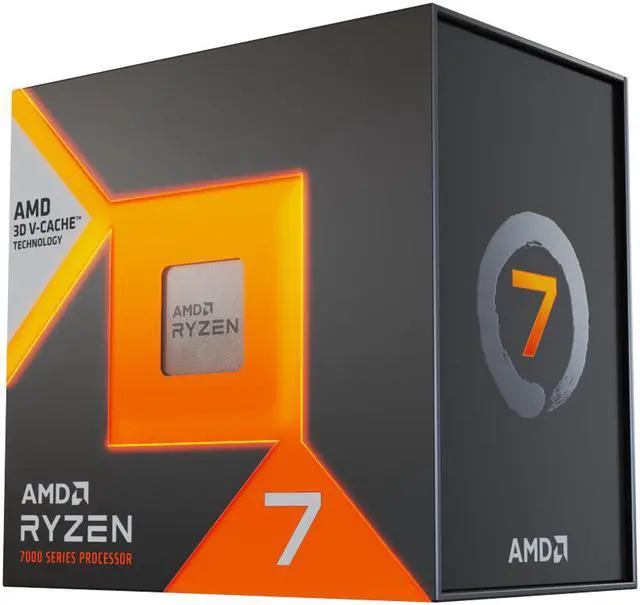
Overview
Choosing the right CPU in 2024 comes down to one critical question: what do you primarily use your PC for? The AMD Ryzen 7 7800X3D and the Intel Core i7-14700K represent two fundamentally different philosophies in processor design, and understanding those differences will save you both money and frustration. The 7800X3D is AMD's laser-focused gaming weapon, built around its revolutionary 3D V-Cache technology. The i7-14700K, meanwhile, is Intel's versatile all-rounder, packing 20 cores to handle everything from gaming to content creation with impressive efficiency. Both are excellent processors, but they excel in very different scenarios.
Design Comparison
The AMD Ryzen 7 7800X3D is built on AMD's Zen 4 architecture and sits in the AM5 socket (LGA 1718). Its headline feature is the staggering 96MB of L3 cache enabled by AMD's 3D V-Cache stacking technology — nearly three times what Intel offers here. This cache-heavy design is specifically engineered to keep game data as close to the CPU cores as possible, dramatically reducing latency. However, this comes at a trade-off: the 7800X3D offers only 8 cores and 16 threads, and its 3D V-Cache stacking limits clock speed headroom, meaning overclocking is essentially off the table. It also ships without a cooler, so budget accordingly. On the positive side, the AM5 platform is AMD's long-term socket investment, meaning upgrade paths remain open for years to come.
The Intel Core i7-14700K takes a completely different approach. Based on the Raptor Lake Refresh architecture and using the LGA 1700 socket, it combines 8 Performance cores with 12 Efficiency cores for a total of 20 cores and 28 threads. This hybrid design makes it a multitasking powerhouse. Its 28MB of L2 cache is notably generous, though its 33MB L3 cache pales in comparison to the 7800X3D's mountain of cache. One important caveat: the LGA 1700 socket is at the end of Intel's roadmap, meaning this platform has limited upgrade longevity. The i7-14700K also runs significantly hotter under sustained loads, with a Maximum Turbo Power (MTP) rating of 253W — more than double the 7800X3D's 120W TDP.
Performance Comparison
In gaming, the AMD Ryzen 7 7800X3D is simply the best consumer CPU money can buy right now. Its 3D V-Cache technology delivers consistently higher frame rates across a wide variety of titles, particularly in CPU-bound scenarios. Games that rely heavily on fast data access — open-world titles, strategy games, and competitive shooters — see the most dramatic benefits. The performance lead over the i7-14700K in gaming typically ranges from 10% to over 30% depending on the title, which is a meaningful difference, especially at lower resolutions where the CPU is more likely to be the bottleneck.
Flip the workload to productivity tasks, however, and the tables turn. The i7-14700K's 20-core, 28-thread configuration delivers near i9-level multi-threaded performance, making it significantly faster than the 7800X3D in video rendering, 3D modeling, software compilation, and other heavily parallelized tasks. If you stream while gaming, edit videos regularly, or run virtual machines alongside your daily workflow, the i7-14700K's core count advantage becomes genuinely impactful. The 7800X3D, while not slow in productivity tasks, simply cannot match Intel's thread count in these scenarios.
Power efficiency is another area where AMD shines. The 7800X3D's 120W TDP means lower electricity costs, less heat output, and quieter operation — a significant quality-of-life advantage for users who value a calm, cool system. The i7-14700K's 253W maximum power draw demands robust cooling solutions and can make a real difference in system temperatures and noise levels under sustained workloads.
Value for Money
Both processors occupy a similar price bracket in the mid-to-high-end market, which makes the comparison particularly sharp. The 7800X3D earns its 10/10 rating by delivering the best gaming performance available at any price point — a remarkable achievement for a chip that doesn't even top AMD's own lineup in core count. For a dedicated gamer, it represents outstanding value.
The i7-14700K's 8/10 reflects its strong but not class-leading position. It offers tremendous versatility and near-flagship multi-threaded performance at a price below the i9-14900K, making it excellent value for content creators or professionals who also game. However, the looming end-of-life status of the LGA 1700 platform is a genuine concern for long-term value. AM5 buyers can reasonably expect future CPU upgrades without a motherboard change; LGA 1700 buyers cannot.
Neither chip includes a cooler in the box, so factor in the cost of a quality air or liquid cooler for both — though the i7-14700K's higher thermal output means you'll likely need to spend more on cooling hardware.
Final Verdict
The AMD Ryzen 7 7800X3D is the undisputed choice for gamers. If your primary use case is playing games — whether competitively or casually — nothing at this price point comes close. Its 3D V-Cache advantage is real, measurable, and consistent across virtually every gaming scenario. Add in the AM5 platform's upgrade longevity and excellent power efficiency, and it's a future-proof investment that's hard to argue against for the gaming-focused buyer.
The Intel Core i7-14700K is the smarter pick for users who need a genuine all-rounder. If your PC doubles as a workstation for video editing, streaming, 3D rendering, or other CPU-intensive creative work, the i7-14700K's 20 cores will serve you far better than the 7800X3D's 8. Just be aware of the platform's limited upgrade path and plan your cooling solution accordingly.
In short: game primarily? Get the 7800X3D. Create and game in equal measure? The i7-14700K earns its place.
Related Products
- AMD Ryzen 7 7800X3DThe ultimate gaming CPU — unmatched frame rates and cache technology make it the top choice for dedicated gamers with AM5 platform longevity as a bonus.
- Intel Core i7-14700KA powerful all-rounder with near-flagship multi-threaded performance, ideal for creators and streamers who game, though limited by its end-of-line platform.