RTX 4070 Super vs RTX 4060 Ti vs RX 7800 XT: Best Mid-Range GPU
Three mid-range GPUs battle for 1440p dominance. The RTX 4070 Super leads on features, the RX 7800 XT wins on value and VRAM, and the RTX 4060 Ti excels at efficiency.
Overview
The mid-range GPU market has never been more competitive, and three cards are dominating the conversation in 2024: NVIDIA's GeForce RTX 4070 Super, the GeForce RTX 4060 Ti, and AMD's Radeon RX 7800 XT. Each card targets a slightly different buyer, but all three promise solid 1440p gaming without breaking the bank. Whether you're building a new rig or upgrading from a previous generation, choosing the right card comes down to your resolution target, budget, and how much you value features like ray tracing and AI-powered upscaling. Let's break down how these three GPUs stack up across every key dimension.
Design Comparison
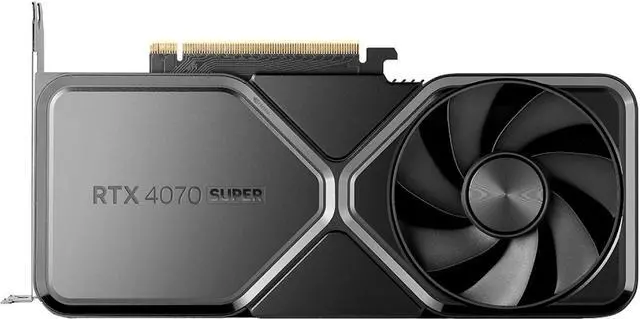
All three cards adopt a multi-fan cooler design typical of modern GPUs, though their physical footprints differ meaningfully. The RTX 4060 Ti is the standout here for compact build enthusiasts — its 160W TDP means board partners can ship it in smaller, single 8-pin power configurations, making it an excellent fit for mini-ITX and mATX cases. It's the most build-friendly of the three.
The RTX 4070 Super steps up in size to accommodate its 220W thermal envelope, requiring a recommended 700W PSU. It sits comfortably in mid-tower cases and offers a clean 192-bit memory bus paired with 12GB of fast GDDR6X memory. Its Ada Lovelace architecture brings 7,168 CUDA cores to the table — a significant jump over the 4060 Ti's 4,352.
The RX 7800 XT is the most physically demanding of the trio, drawing up to 263W under load and also recommending a 700W PSU. Its RDNA 3 architecture features 3,840 stream processors, but the headline spec is its 16GB of GDDR6 memory across a wide 256-bit bus — the most generous configuration in this class. If you run multiple monitors or do creative work alongside gaming, that memory advantage is immediately apparent.
Performance Comparison
At 1080p, all three cards are frankly overkill for most titles, delivering well above 100fps in demanding games. The RTX 4060 Ti earns its place here as the most power-efficient option, punching above its weight at this resolution while sipping just 160W. For competitive gamers on high-refresh 1080p monitors, it's a compelling choice.
At 1440p — the sweet spot for modern gaming — the hierarchy becomes clearer. The RTX 4070 Super leads the NVIDIA lineup with strong rasterization performance, typically outpacing the RTX 4060 Ti by 20–30% in GPU-limited scenarios. Its 12GB of GDDR6X memory ensures no bottlenecks in current titles, and DLSS 3 Frame Generation can effectively double perceived frame rates in supported games, giving it a distinct edge in the growing library of DLSS 3-compatible titles.
The RX 7800 XT trades blows with the RTX 4070 Super in pure rasterization performance, often matching or slightly trailing it depending on the title. Where it truly differentiates itself is memory bandwidth and capacity: the 256-bit bus and 16GB VRAM give it headroom that neither NVIDIA card can match, making it particularly future-proof as games increasingly push past 8GB VRAM usage. However, AMD's ray tracing performance remains a step behind NVIDIA's dedicated RT cores, and the absence of a DLSS Frame Generation equivalent (FSR 3 Frame Generation exists but lacks the same ecosystem maturity) is a notable gap.
For 4K gaming, the RTX 4070 Super and RX 7800 XT are both capable of delivering playable frame rates in many titles, especially with upscaling engaged. The RTX 4060 Ti's 128-bit memory bus becomes more of a limiting factor at 4K, making it less ideal for that resolution target.
Value for Money
Pricing in this segment shifts frequently, but the general hierarchy positions the RTX 4060 Ti as the most affordable, followed by the RX 7800 XT in the middle, and the RTX 4070 Super at a premium. That pricing structure largely reflects their performance tiers.
The RTX 4060 Ti offers solid value for 1080p and light 1440p gaming, but its 8GB VRAM and 128-bit memory bus are increasingly concerning for longevity. Several recent titles already push against that 8GB ceiling, and paying for a card today that may struggle in two years is a real consideration. It's best suited for budget-conscious buyers who prioritize power efficiency and DLSS access over raw headroom.
The RX 7800 XT arguably delivers the best price-to-performance ratio in this trio. Its 16GB VRAM and wide memory bus provide exceptional value, and its rasterization performance is competitive with the pricier RTX 4070 Super. If you're primarily a rasterization gamer and don't rely heavily on NVIDIA's ecosystem features, this card offers more GPU for your money.
The RTX 4070 Super commands a premium, but it justifies that cost with the best overall package: strong performance, DLSS 3 Frame Generation, excellent power efficiency relative to its output, and 12GB of fast VRAM. For buyers who want the most polished experience — particularly with ray tracing and AI features — the premium is defensible.
Final Verdict
Choosing between these three cards depends entirely on your priorities. The RTX 4060 Ti is the right pick if you're on a tighter budget, gaming at 1080p, or need a compact, low-power build. Just be aware that its 8GB VRAM may feel limiting sooner than you'd like.
The RX 7800 XT is the value champion — if you want the most VRAM, the widest memory bus, and competitive 1440p performance without paying a premium, AMD's offering is hard to beat. It's the pragmatic choice for gamers who want future-proofing on a mid-range budget.
The RTX 4070 Super is the premium pick that earns its price tag. DLSS 3 Frame Generation, excellent ray tracing, and a well-rounded feature set make it the top all-rounder in this comparison. If you want the best 1440p experience available in the mid-range tier — and potentially dabble in 4K — this is the card to buy.
Related Products
- NVIDIA RTX 4070 SUPERBest all-round mid-range GPU with top-tier DLSS 3 support and strong 1440p performance, though it commands a premium price.
- NVIDIA RTX 4060 TiMost power-efficient and compact option, ideal for 1080p gaming, but 8GB VRAM and a 128-bit bus limit long-term future-proofing.
- AMD Radeon RX 7800 XTBest value pick with class-leading 16GB VRAM and a wide 256-bit memory bus, though ray tracing and upscaling lag behind NVIDIA.